
Healthcare · Private Equity
To What Extent Does Private Equity Ownership Benefit US Healthcare Companies?

Abstract
This study aims to assess the degree to which private equity (PE) investment contributes to the welfare of healthcare firms in the United States by comparing its impact on hospital services and pharmaceutical and biotech firms. Guided by economic theories and studies, the research argues that the overall effect of private equity on the welfare of firms varies by the production structure of each sector. The study reveals that in the healthcare sector, hospitals that are financed by private equity face improved financial performance, but this also brings increased financial fragility, hospital-acquired conditions, and unfavourable externalities on the community. Conversely, the pharmaceutical and biotech industry, where private equity investment occurs, benefits from innovation, expansion of research, and production, though there are concerns regarding price and allocative efficiency. The thesis argues that the overall effect of private equity on the welfare of healthcare firms is conditional and more consistent with the value created in innovation-driven industries rather than labour-intensive healthcare delivery services.
Introduction
Private equity (PE) investments have established themselves as a notable financial trend in the US healthcare sector. Between 2006 and 2024, PE investments in US healthcare and associated businesses, including hospitals, physician practices, biotech companies, medical device manufacturers, and pharmaceutical businesses, totaled close to $1 trillion (American Investment Council, 2024; Bain & Company, 2025). In 2024, PE transactions in the US healthcare sector reached 1,049, including 166 buyouts and 621 add-on transactions (PitchBook, 2024). However, an important question arises from these substantial financial investments in US healthcare firms: how far can PE investments in US healthcare firms be seen as a 'beneficial' trend.
The notion of 'beneficial' is multi-faceted. Financially, several researchers have shown that PE investments in hospitals in the US are associated with improved profitability and reduced costs in the short run (Gao et al., 2023). However, the healthcare sector is characterized by third-party payers, asymmetric information, moral hazards (Arrow, 1963), and governmental intervention. Hence, 'beneficial' in the US healthcare sector is not just related to financial metrics but also to quality, sustainability, and welfare.
In line with the aforementioned, the application of the relevant economic theory implies that different predictions emerge regarding the role of PE in the management of hospitals. The hypothesis of leverage discipline implies that the discipline of debt obligation will lead to the reduction of waste and the improvement of productivity in the hospital industry (Jensen, 1986). However, the principal-agent problem may also emerge as the general partners of PE seek to maximize the internal rate of return over a relatively short time horizon of three to seven years (Appelbaum & Batt, 2014). Nevertheless, emerging evidence suggests that the PE model of hospital management may be challenged by factors that transcend the realm of theory. A 2023 JAMA analysis of Medicare data revealed that hospital-acquired conditions rose significantly in PE-owned hospitals without a corresponding increase in hospital mortality (Kannan, Bruch, & Song, 2023). Concurrently, the PE model of hospital management has also been challenged in the case of Steward Health Care, which filed for Chapter 11 bankruptcy in 2024 (Financial Times, 2024; Wall Street Journal, 2024).
The hospital industry is merely one segment of the PE industry as a whole. The pharmaceutical industry has a distinct economic structure wherein innovation drives value creation through the development of new medicines. In the context of the aforementioned, the role of PE and venture capital is to facilitate the development of new medicines by providing significant upfront capital that is required to develop new medicines. Emerging evidence indicates that over $280 billion has been invested in over 1,800 life sciences companies in the US over the last ten years (American Investment Council, 2024).
In the context of the pharmaceutical industry, the role of PE can be interpreted as creating positive externalities for the wider economy by promoting innovation in novel therapeutic areas. Nevertheless, the financialisation theoretical perspective suggests that the value extraction activities promoted by PE can be seen to have negative implications for the wider economy (Krippner, 2011; Lazonick, 2014). The underlying argument of this study is that the economic impact of PE's involvement in healthcare is sector-specific. While it is impossible to separate the labor- and safety-intensive production function of hospitals from direct patient interaction, the pharmaceutical and biotech industries can be differentiated by their research and development processes, whose output consists of intellectual capital and manufactured products. This study seeks to determine if there is a differentiation of PE's financial impact by sector and has found that while PE can have a positive impact on the pharmaceutical and medical technology industries by spurring innovation and providing capital, it can have a negative impact on the labor-intensive hospital sector. The study consists of three parts: Part I examines hospitals, Part II examines pharmaceuticals, and Part III synthesises the findings.
Part I: PE Ownership of Hospitals
Financial Structure and Leverage in Private Equity Hospital Acquisitions
In the context of the purchase of a hospital system by a private equity firm, the most prevalent model which is the leveraged buyout (LBO) model dominates the industry (Appelbaum & Batt, 2014). Here, the acquiring firm invests a relatively small amount of equity into the target firm compared to the total cost of the deal, with the remainder of the cost represented by debt that sits on the balance sheet of the target firm.
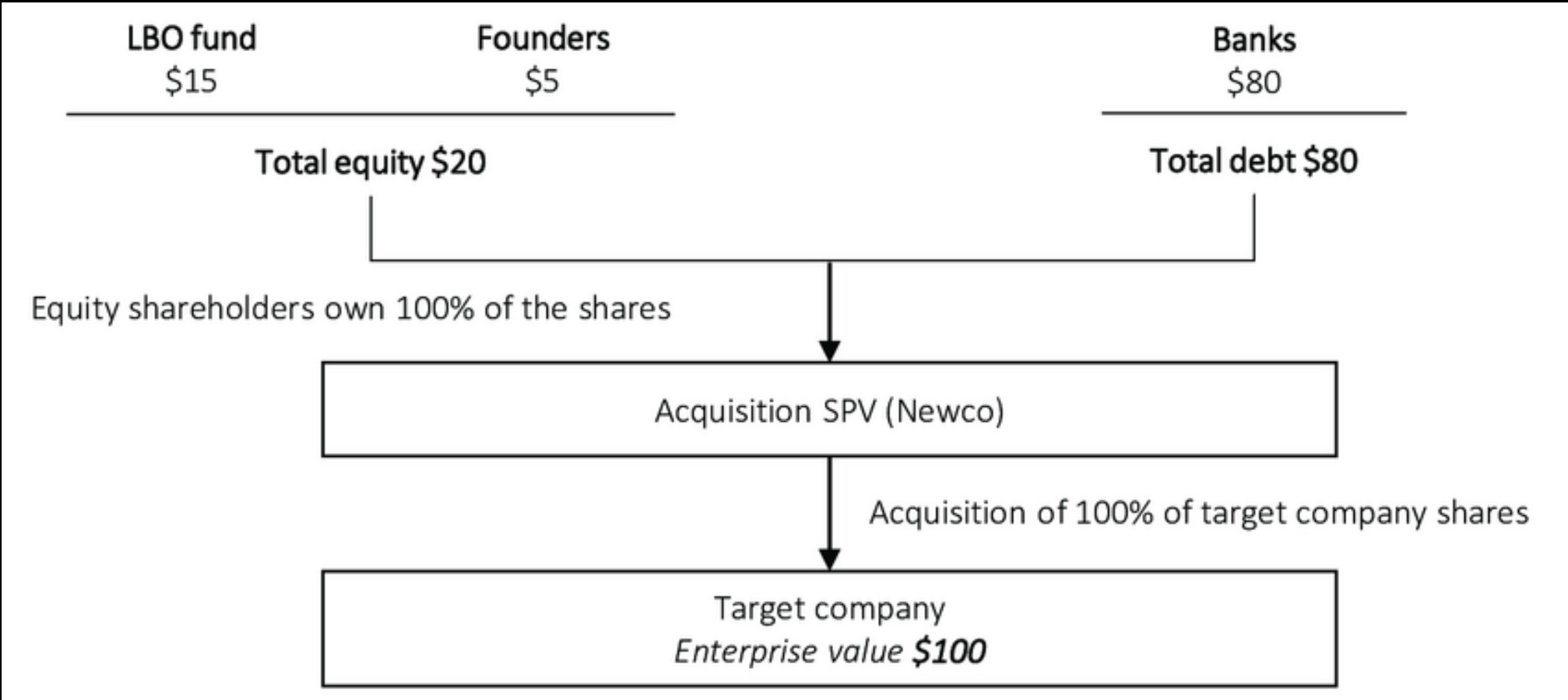
Figure 1 represents the general idea behind the LBO model. As an example, the target firm's enterprise value sits at $100. The acquiring firm invests $20 into the firm, with $15 from the PE firm's investment and the remaining $5 from the founders. Meanwhile, the firm takes on the remaining $80 as debt. Despite the fact that the firm's equity holders own 100 percent of the firm's equity base, the firm still needs to service the debt of $80. Not only do the equity holders receive a high return on investment as the firm's performance increases, but they also take on a tremendous amount of risk. Notably, the firm's interest expenses will continue to grow regardless of the patient volumes or reimbursement rates.
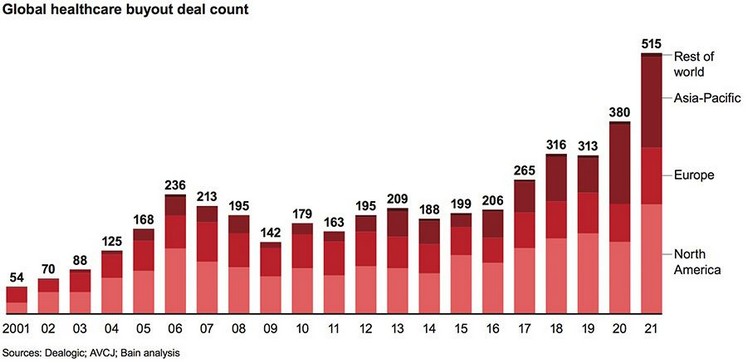
The penetration of PE investments within the healthcare industry is shown in Figure 2. The number of global healthcare buyouts has increased from 54 transactions in 2001 to 515 transactions in 2021, indicating a near tenfold increase over the past two decades. The pace of transactions has been high over the past few years, with the number of transactions increasing from 206 to 380 in 2020 and then to 515 transactions in 2021, with North America being the major market focus. This period has coincided with the long period of low interest rates that began with the financial crisis of 2008 (World Bank, 2023). This suggests that the growth in leverage transactions is structural rather than cyclical.
The leverage discipline hypothesis offers a theoretical basis to understand the potential benefits that may accrue from a PE investment. It argues that debt obligations may discipline managers to eliminate wasteful expenditures and improve efficiency (Jensen, 1986). Empirical evidence provides some support to the potential benefits of a PE acquisition. Gao, Kim, and Sevilir (2023) report that hospital systems acquired by PE firms reported statistically significant short-term operating margin improvements because of reductions in administrative costs. Some hospital systems reported improved EBITDA over a period of two to three years post-acquisition.
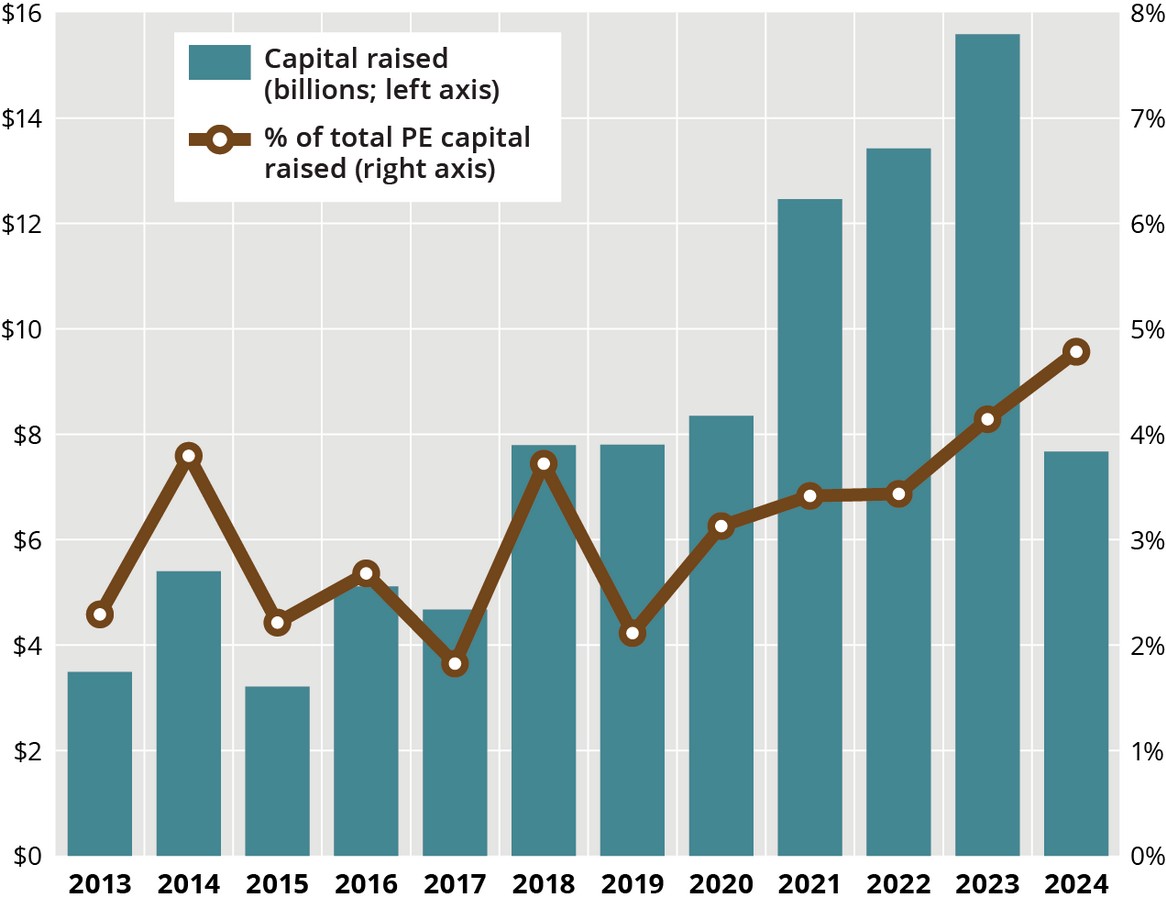
Nonetheless, the structural implications of leverage bear different characteristics in the healthcare sector compared to other industries. For instance, hospitals are characterized by high fixed costs, a labor-intensive business model, and high dependence on Medicare and Medicaid reimbursements. Unlike other consumer-facing companies, which can freely negotiate prices, hospitals are limited by insurance contracts and government pay schedules (Centers for Medicare & Medicaid Services, 2022). On the other hand, debt repayment obligations are fixed. Leveraged hospitals demonstrate asymmetrical risk profiles, where debt repayment is fixed, but the environment is constantly changing. As depicted in Figure 3, capital invested in healthcare-focused PE funds has grown from $3.5 billion in 2013 to almost $16 billion in 2023, while the percentage of capital invested in the healthcare sector relative to the broader PE industry has grown from 2-3% to almost 5% by 2024. This may lead to a more competitive environment for acquisitions, thereby creating more fragile hospital systems already constrained by limited reimbursement growth and high fixed costs.
Steward Health Care is a prime example of the above dynamics. As a PE-owned health system, it grew to 31 hospitals before filing for Chapter 11 bankruptcy in 2024, with liabilities of almost $9 billion, of which $1.3 billion was paid out to investors via dividend recapitalizations (Financial Times, 2024; Wall Street Journal, 2024). While not all PE-owned health systems may experience such high levels of financial distress, the Steward Health Care example illustrates the potential for financial instability. Steward Health Care was, however, not an isolated example. In fact, more than 20% of the health bankruptcies filed at the start of 2024 were PE-owned health systems (Private Equity Stakeholder Project, 2024). As such, the economic question is no longer the financial benefit of PE ownership, which is almost guaranteed for the PE owner, but rather the potential for the fragility of the health system. Health systems are essentially quasi-public entities, and the failure of such a system has negative externalities for the population it serves.
Operational Restructuring and Workforce Implications
Labor expenditures make up the largest portion of hospital operating expenses, accounting for around 50-60% of total expenses (Peterson Center on Healthcare, 2023). It follows that any strategy that attempts to improve EBITDA margins through rationalization of costs automatically focuses on labor expenditures.
Evidence on the operational response to the economic pressures of PE ownership on hospital systems suggests that PE acquisitions are linked to operational restructuring. Gao, Kim, and Sevilir (2023) report that PE-owned facilities have lower administrative costs and improved short-run operating margins. PE proponents argue that the cost savings are the result of the elimination of bureaucratic inefficiency — back office consolidation, contract renegotiation, and procurement optimization — rather than the elimination of clinical staff positions. Some studies support this contention: clinician-to-patient ratios were lower after PE acquisition but returned to pre-PE levels within a few years.
However, the distinction between administrative staffing and clinical staffing may not be economically neutral. Indeed, hospitals are complex systems where a decrease in support staffing increases the workload for clinical staff. A survey revealed that 61% of internists perceived PE involvement negatively, though this is perception-based rather than outcome-based evidence (Commonwealth Fund, 2023).
The association between the intensity of staffing and patient outcomes has already been well established within the broader literature. Empirical evidence confirms that lower nurse-to-patient staff ratios are linked to higher rates of infections, increased patient falls, and longer hospital stays (Aiken et al., 2014). Critically, the association between the intensity of staffing and patient safety outcomes is nonlinear, whereby small changes to the staff-to-patient ratio have a disproportionate impact on patient safety outcomes. Within leveraged hospital systems, labor expenses are the most flexible cost component and, as a result, any cost savings measure could have a disproportionate impact on patient safety outcomes.
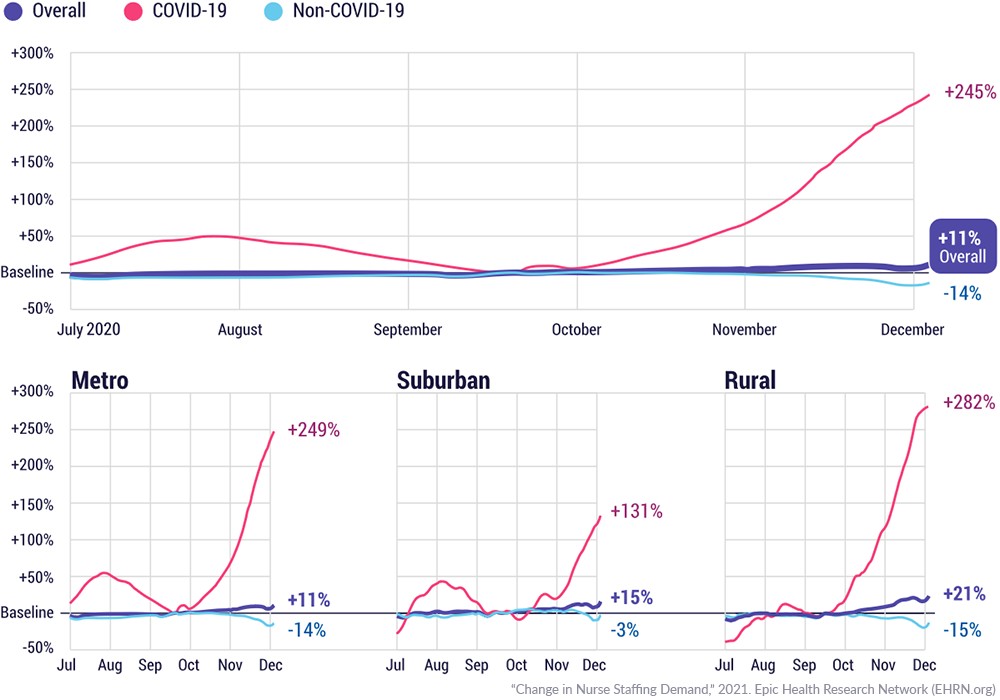
Figure 4 places this discussion within a broader context of healthcare workforce strain, where nurse staffing demands increased by as much as 245% nationally and 282% in rural areas during the second half of 2020. While this is related to pressures in a pandemic situation and not directly related to PE per se, it does illustrate the volatility of the labor market in which PE's cost rationalisation occurs.
Challenges with workforce sustainability have also been reported from the systems of PE-owned facilities, including high turnover rates that could erode the short-term profitability advantages, especially in rural areas with already limited labor pools.
However, there are methodological challenges. Not all research has noted a statistically significant change in clinical staffing ratios. Other research has noted no significant change in hospital readmission rates. In addition, there is the possibility of selection bias, as financially distressed facilities may be more likely to be acquired by a PE, especially due to the financial challenges (Song et al., 2023). Nevertheless, the consensus is that while PE ownership is beneficial for operating margins due to the rationalization of the administration, it may add additional challenges to the service delivery, especially for the workforce.
Clinical Outcomes and the Mortality Paradox
The discussion above establishes that private equity firms impose financial leverage and operating restructuring within hospital systems. In theory, these actions create a risk framework within clinical outcomes. However, the extent of risk needs to be quantified based on patient-level empirical evidence. The best evidence to date was provided by a 2023 JAMA study that analyzed Medicare claims data within PE-acquired hospitals (Kannan, Bruch, and Song, 2023).
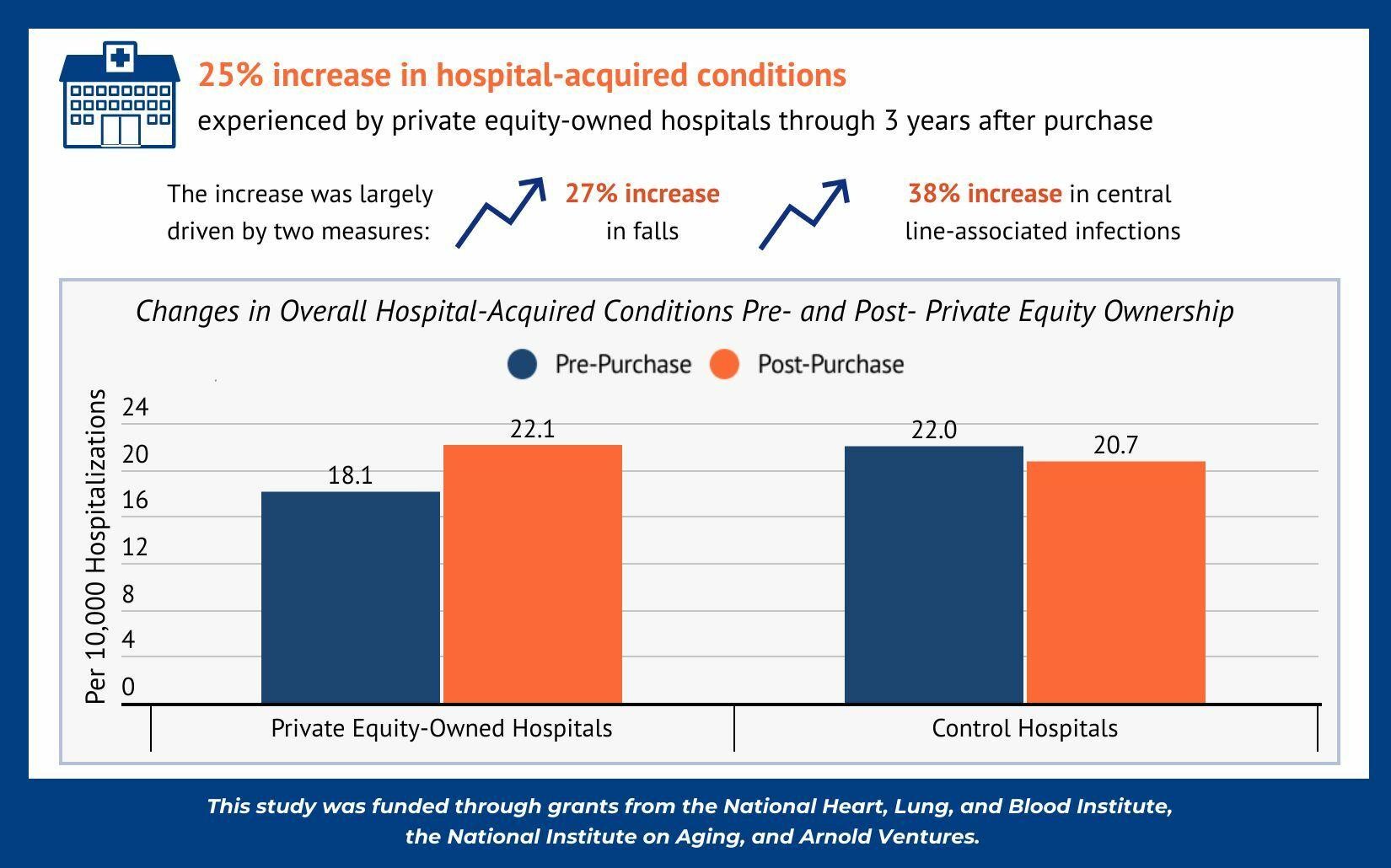
In their findings, the authors report that hospital-acquired conditions were statistically significant at a 25% increase within three years post-PE acquisition compared to control hospitals that were not acquired by a PE firm. Central line bloodstream infections rose by 38%, and falls rose by 27%. These outcomes were not seen within the control hospital population over the same period.
However, the same authors report that hospital mortality rates did not statistically increase over the same period. In fact, mortality rates were slightly lower within the same period. This may represent what can be called a mortality paradox.
Several factors could be responsible for this mortality paradox. Firstly, mortality rates are naturally low in any case, and it is possible that nonfatal complications are simply not high enough to impact mortality rates in a meaningful way. Secondly, it is possible that patient selection factors are playing a role, insofar as PE-owned hospitals are referring more complex cases to tertiary facilities, thus keeping mortality rates stable in these referring hospitals. Perhaps most importantly, nonfatal adverse outcomes impose a considerable welfare burden, including Medicare fines under value-based purchasing programs, increased recovery periods, and malpractice liability (CMS, 2022).
This distinction points to a theoretical difference in outcomes. While clinical outcomes are not synonymous with death, patient outcomes include safety, recovery time, and the lack of preventable complications. Thus, a hospital system where mortality rates are stable and infection rates are increasing is a system with worse quality of care by any economic definition.
It is also important to note some methodological limitations. Although the difference-in-differences approach adopted in the JAMA study is methodologically sound, it still cannot control for unobserved factors (Angrist & Pischke, 2009). Furthermore, the reliance on Medicare claims data restricts the study to a largely elderly population, which may not be generalizable to the broader hospital-going population. Perhaps most problematic is the potential for selection bias, as PE firms may purchase hospitals in decline, meaning that any decline in quality could be a pre-existing trend (Song et al., 2023).
System-Level and Community Effects: Closures, Access, and Externalities
Hospitals are in a structurally unique position in the healthcare economy (Porter and Teisberg, 2006). While pharmaceutical companies create tradable intellectual property for a global market, hospitals create geographically specific emergency infrastructure. When a hospital experiences financial distress, it is not simply a matter of investor losses; it is a matter of community-wide access to healthcare infrastructure. To understand the systemic impact of private equity ownership, it is therefore necessary to examine trends in closures, access, and overall financial fragility.
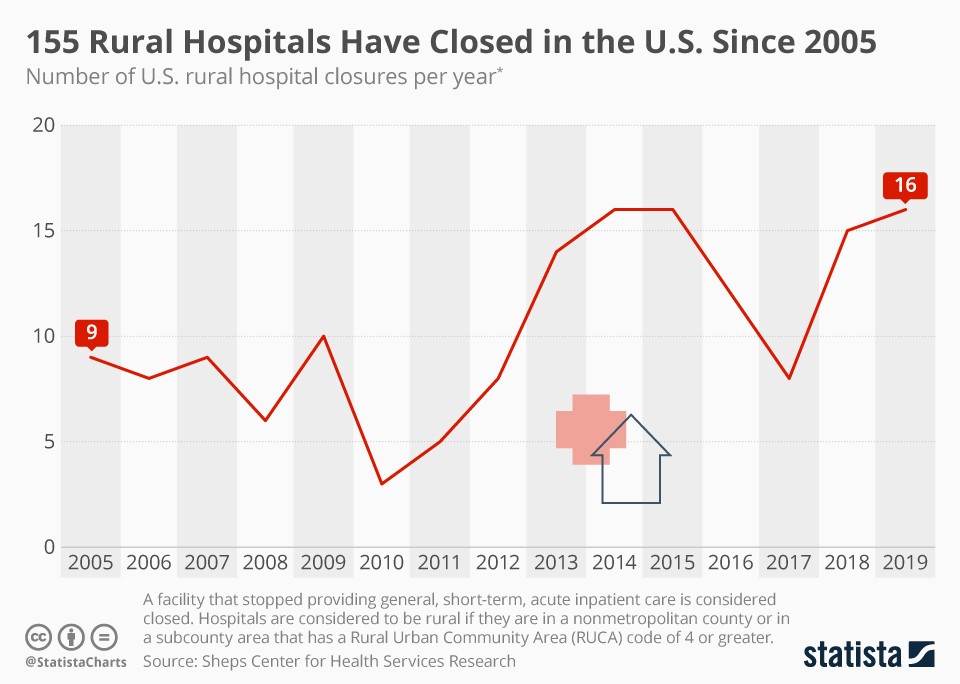
Approximately 460 hospitals in the United States, or more than 25% of rural hospitals, are owned by private equity firms as of early 2024 (Private Equity Stakeholder Project, 2024). Furthermore, a third of emergency departments in the United States are operated by private equity staffing companies. As shown in Figure 6, there has been a clear acceleration in rural hospital closures since 2013, with multiple years experiencing more than 15 closures (Sheps Center for Health Services Research, 2023). While rural hospitals have historically faced challenges related to low patient volumes, high fixed costs, and a high proportion of Medicare and Medicaid reimbursement, it is clear that this closure trend represents a systemic fragility.
PE ownership is not directly related to rural hospital closures; however, when combined with existing thin profit margins, overall systemic fragility increases. For example, debt repayments are fixed and do not change with reimbursement rates or patient volumes. As a result, in a distressed rural market, moderate swings in revenue could lead to insolvency.
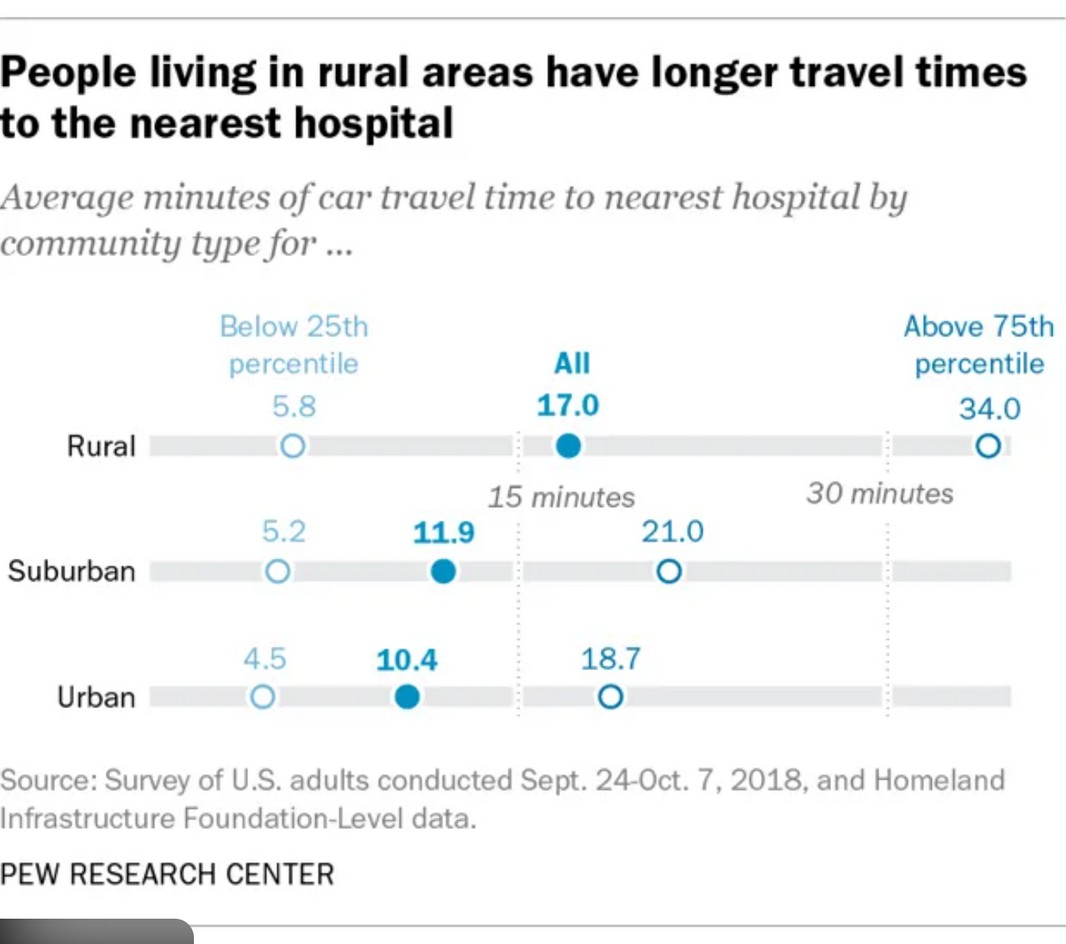
Figure 7 illustrates the welfare effects of the closure of hospitals in rural areas. On average, the travel time to the nearest hospital is 17 minutes in general rural areas and 34 minutes in those with the highest distance. From the welfare economics point of view, the increase in travel time to emergency care can be considered a quantified negative externality. In emergency health situations, delays in accessing medical facilities increase the probability of complications and death (Pew Research Center, 2018; OECD, 2023). These costs are imposed on the communities and not on the investors who appropriate the returns from the leveraged hospital businesses.
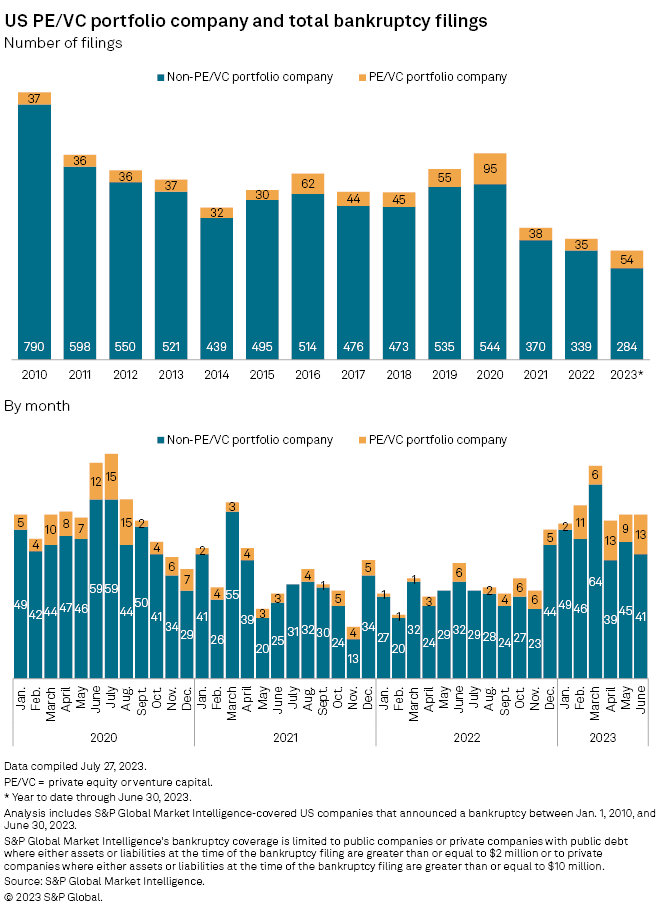
Figure 8 shows an increasing trend for bankruptcies of private equity and venture capital portfolio companies. Though the dataset represents all types of PE/VC companies instead of hospitals alone, the increasing trend holds relevance to the context of hospitals with fixed reimbursement rates making them vulnerable to increasing debt servicing costs due to interest rate hikes since 2022 (Moody's Analytics, 2024).
The social welfare cost of hospital variance is asymmetric in that an above-average return to investors is a private benefit, while the loss of a hospital is a loss to the community with negative impacts on emergency response time, employment, and the overall regional economy. The analysis above suggests a trade-off between efficiency and resilience in PE-owned hospitals. However, the pharmaceutical sector has a fundamentally different economic structure, examined in Part II.
Part II: PE Ownership of Pharmaceuticals and Biotech Companies
Structural Differences and Capital Provision
The impact of PE ownership varies significantly across healthcare sub-sectors that align with the fundamental differences in their economic architecture. Hospitals represent labour-intensive service providers with a highly regulated reimbursement environment. In contrast, the pharmaceutical and biotechnology industries represent capital-intensive businesses with a value proposition that focuses on creating intellectual property. The process of developing a drug involves substantial upfront costs with highly uncertain future returns. The current estimate to bring a drug to market ranges from $1 billion to $2.6 billion (DiMasi, Grabowski, and Hansen, 2016). In addition, Deloitte's report based on their 2025 predictions estimated that the process requires $2.23 billion per asset with a 12% annual increase in Phase III cycle times. The process can take more than 10 to 15 years to complete. In addition, the probability of a drug making it from Phase I to FDA approval was only 7.9% during the period of 2011 to 2020 but has since reduced to around 6.7% during the period of 2014 to 2023 (BIO/QLS/Informa, 2021; Citeline, 2024). As can be seen from Figure 9, the major bottlenecks occur during the transition from Phase I to Phase II (47-52%) and from Phase II to Phase III (28-29%).
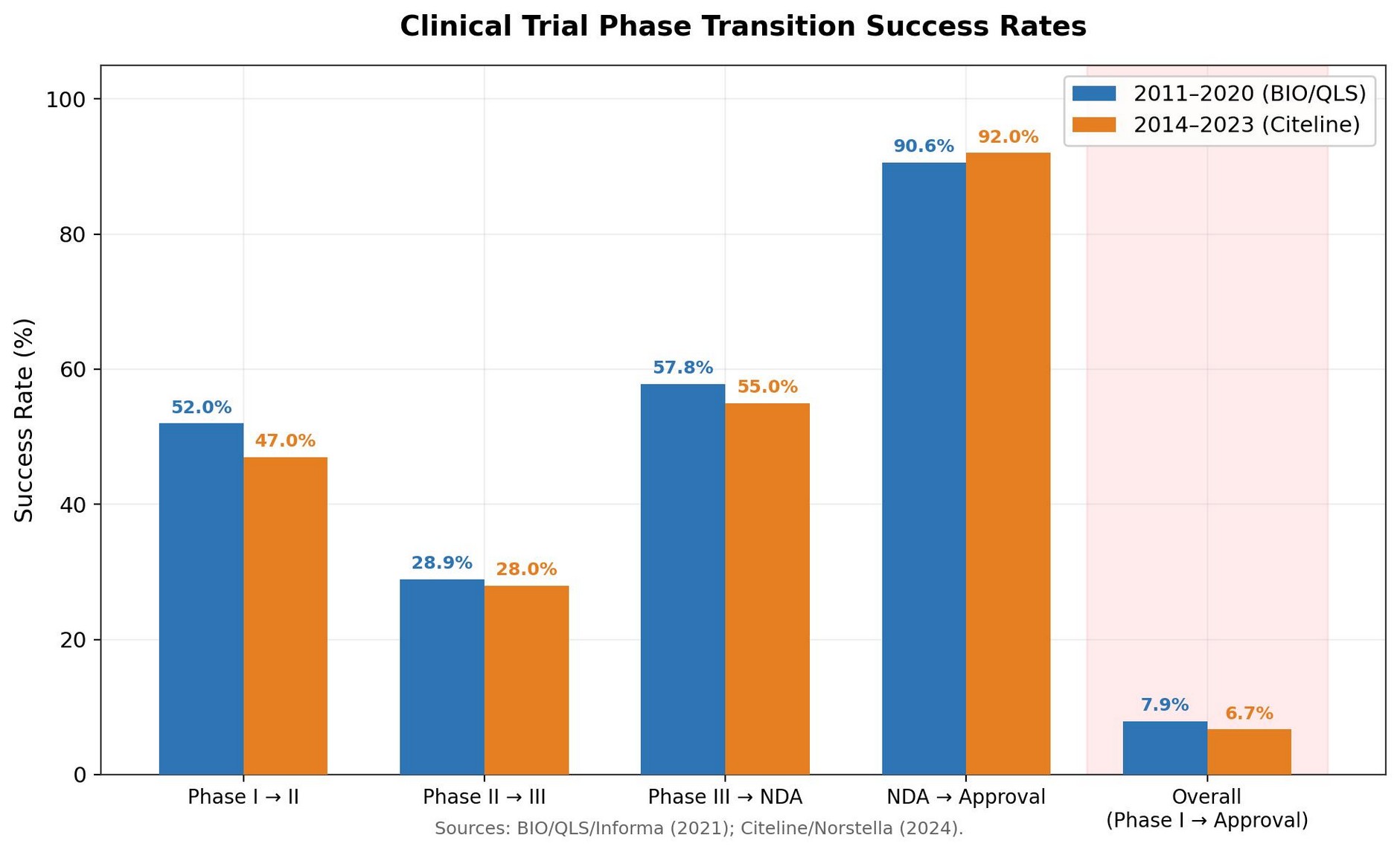
This risk profile is not compatible with bank lending but fits the equity investment model of the high-risk-high-reward type typical for PE or VC investment. Compared to the hospital industry, the pharmaceutical industry can enjoy high margins after drug approval, protected by patent rights. This structural difference suggests that the quality effects of PE investment risk do not necessarily operate through the same channels as those we found for the hospital industry. Welfare risks in the pharmaceutical industry are therefore not the typical operational risks we encountered for the hospital industry but rather the more general affordability risks.
The life sciences industry has attracted considerable investment from the private sector. Between 2014 and 2024, over 1,800 life sciences and medical technology firms in the US attracted over $280 billion in investments (American Investment Council, 2024). In addition, the global healthcare private equity deal value was recorded at $115 billion in 2024 (Bain & Company, 2025) and a record high of $191 billion in 2025 (Bain & Company, 2026). As shown in Figure 10, the US life sciences venture capital deal value has been increasing steadily from $16.7 billion in 2015 to reach a peak of $54.8 billion in 2021 before declining to $37.4 billion in 2024 (PitchBook-NVCA, 2025). Some notable transactions include the acquisition of Catalent by Novo Holdings to improve manufacturing capabilities for $16.5 billion and the acquisition of Sanofi's consumer health assets by Carlyle as part of restructuring efforts totaling $17.3 billion. In terms of innovation economics, the provision of capital increases dynamic efficiency as high-risk R&D that may not be financially feasible can be undertaken (Mazzucato, 2018).
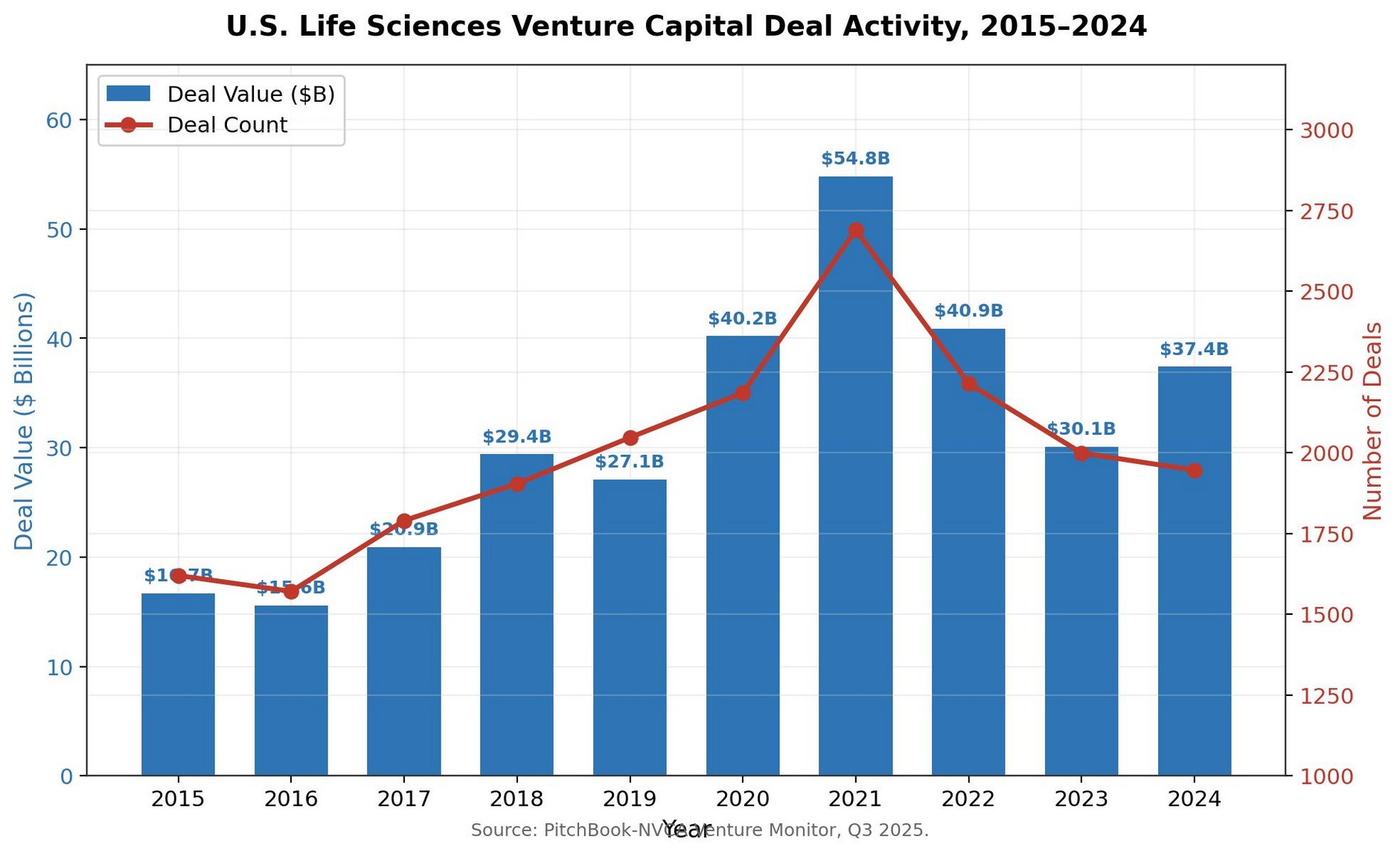
Unlike hospitals, pharmaceutical companies earn significant margins post-approval through patent protection. The welfare risks in pharmaceuticals are therefore distributional — relating to affordability and access — rather than operational, as in hospitals.
Investment Horizons, Innovation, and Financialisation
Despite the benefits of capital provision, there is a structural friction caused by the misalignment of the investment horizon of PE firms, which is between three to seven years (Appelbaum & Batt, 2014), and the research and development horizon, which is estimated at an average of 10.5 years from the start of the first phase to approval (BIO/QLS/Informa, 2021). As financialisation theory argues, the investment objective of exit valuation may lead PE firms to invest more in innovations that provide the highest valuation, rather than investing more in research for the sake of research (Krippner, 2011; Lazonick, 2014). This is reflected by the fact that most of the investment is focused on diseases with strong pricing power, such as oncology and rare diseases, where orphan drug designations provide exclusivity.
Empirical evidence regarding the impact of this misalignment is inconclusive. As Figure 11 shows, the average approval rate of novel drugs per year from 2014 to 2024 is around 47, according to the FDA, which is significantly higher than the average approval rate from 2005 to 2013, which is around 30. Moreover, the percentage of first-in-class drugs has been increasing, from 33% in 2013 to 48% in 2024. However, there are other factors at play, such as the advent of genomics, the expansion of the expedited approval process by the FDA, and the rise of research spending. This evidence indicates that the financialisation of the pharmaceutical industry has not reduced the output of innovation, but it cannot be said that it has increased it.
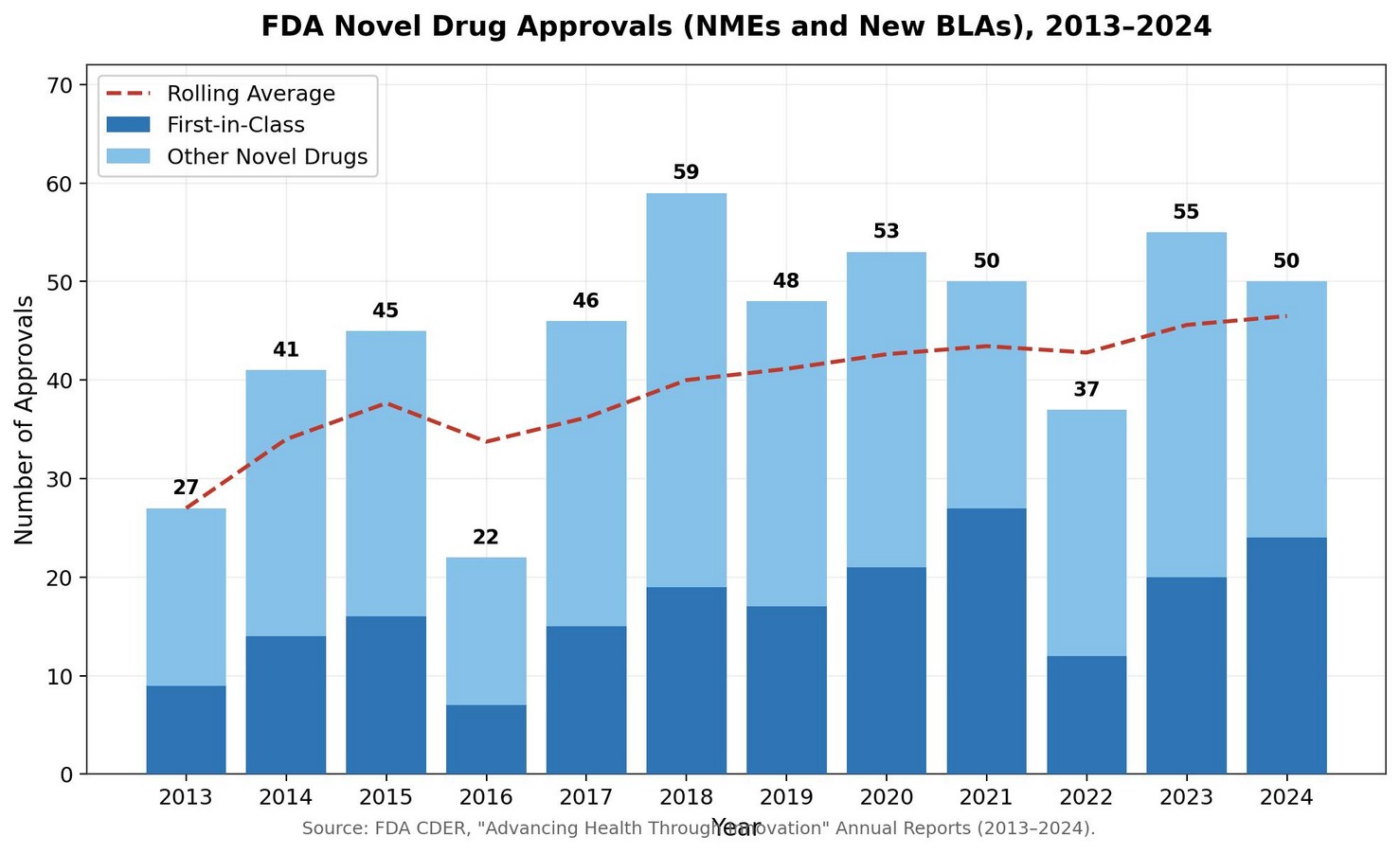
A more fundamental concern relates to whether or not private equity systematically influences the direction of innovation. The pharmaceutical industry follows an Eroom's Law pattern whereby the number of drugs approved for every billion dollars invested in research and development has declined by an 80-fold factor since 1950 (Scannell et al., 2012). Deloitte's annual tracking of the top 20 pharmaceutical companies' R&D returns reveals a record low of 1.2% in 2022. These returns were followed by a resurgence to 5.9% in 2024, with a return of 3.8% excluding GLP-1 therapies (Deloitte, 2025). Financialisation pressures may encourage investments with a high probability of predictable revenue streams while dissuading research into unprofitable yet socially relevant areas like antibiotics. However, the challenge with disentangling the effects of any particular form of ownership on the direction of innovation is methodological. The most compelling conclusion is that financialisation could be affecting the direction of pharmaceutical innovation without necessarily affecting its volume.
Consolidation, Pricing, and Allocative Efficiency
Private equity investment in the pharmaceutical industry is closely linked to industry consolidation. From 1995 to 2015, the top 60 pharmaceutical companies consolidated into approximately 10 companies, with the combined market share of the first eight companies increasing from 36% in 1987 to 53% by 2012 (Washington Post, 2021). Recent M&A transactions continue to be high, with the total M&A transactions valued at approximately $197 billion for the year 2023, with an estimated $240 billion projected for the year 2025 (EY, 2025; McKinsey, 2025). Since the year 2018, more than 70% of the revenue from new molecular entities has been attributed to external sources, thus indicating a trend where large pharmaceutical companies are increasingly becoming more inclined towards acquiring external innovation rather than creating it internally (McKinsey, 2025). In the generic segment, the number of U.S. manufacturers has reduced by approximately 20% since the year 2018, with three buying consortia controlling 90% of the purchases, and six pharmaceutical benefit managers controlling nearly 95% of all prescriptions filled out in the United States (FTC, 2024).
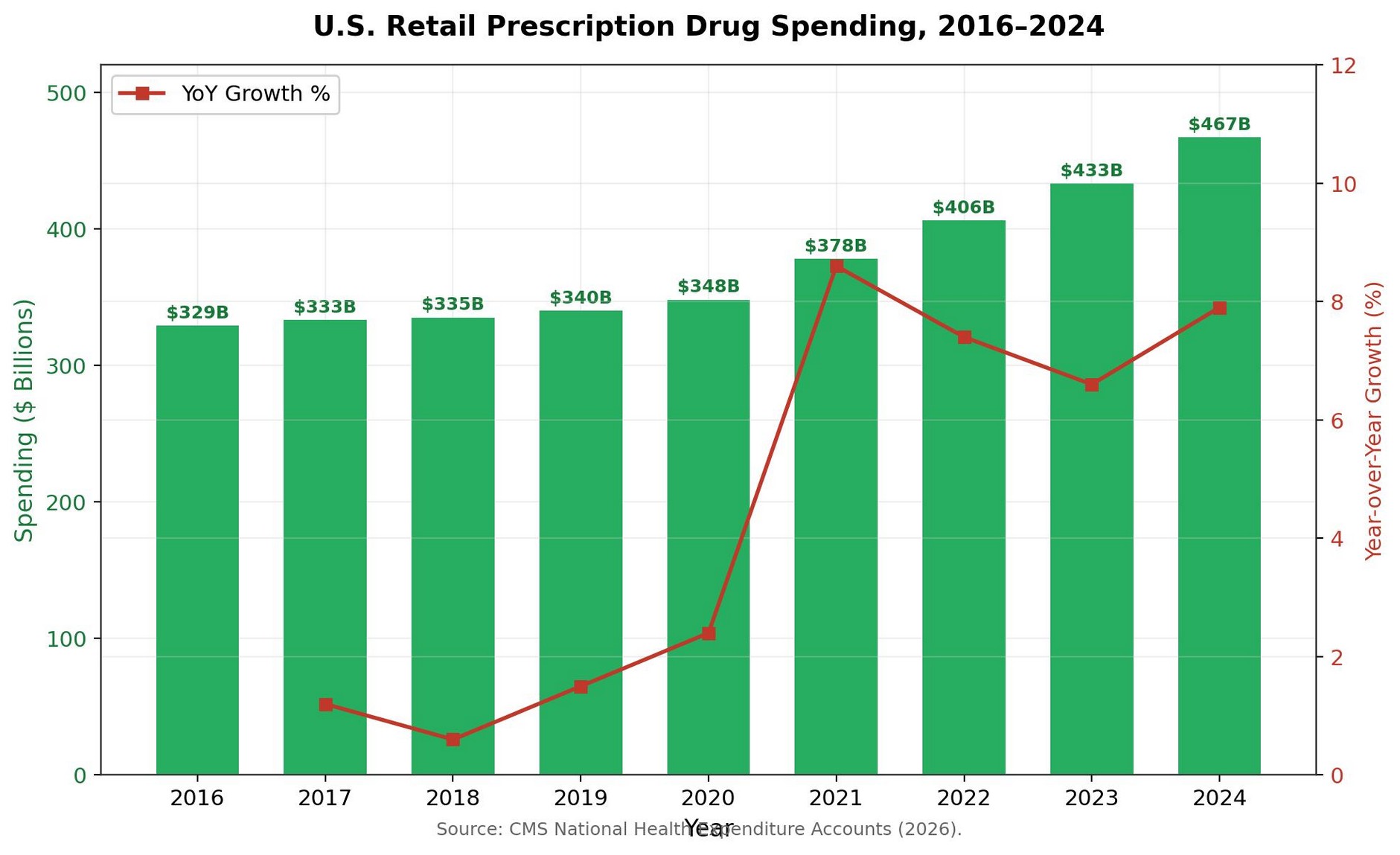
As shown in Figure 12, the expenditure on retail prescription drugs in the US grew from $329 billion in 2016 to $467 billion in 2024. Year-over-year growth accelerated from below 2% in 2018 to between 7% and 11% annually from 2021 onwards. Despite the fact that 90% of the drugs were generic, brand-name drugs comprised 80-86% of the total expenditure. Moreover, the fact that 6.2% of the total Medicare Part D prescriptions were for specialty drugs in 2021 accounted for 71.1% of the total expenditure on Part D drugs, rising from 21.7% in 2012. Additionally, the US pays 422% more for brand-name drugs compared to comparable OECD countries (ASPE/RAND, 2024).
In the context of welfare economics, the above phenomenon represents a trade-off between dynamic efficiency, i.e., the creation of future positive externalities with respect to health outcomes, and allocative efficiency. Welfare effects depend on whether the research and development activities undertaken with the supranormal profits would have been undertaken anyway.
Comparative Welfare Assessment
The body of evidence considered in Part II reveals that private equity investment in the pharmaceutical and biotechnology industries produces a different pattern of costs and benefits compared with investment in hospital systems. On the cost side, affordability is the only concern expressed with respect to private equity investment in the pharmaceutical and biotechnology industries. Specifically, the increase in drug costs from an annual growth rate of less than 2% to close to 8% — coupled with the substantial level of market concentration in branded and generic drugs — creates a situation where ownership can affect pricing.
However, the key difference between the externalities is that they affect different types of patients. In the case of hospitals, the geographical externality is that people are denied access to emergency care facilities. In the case of drugs, the affordability externality is that people may not be able to afford drugs that exist but are priced beyond their means.
The paper suggests that the welfare implications of private equity investment in the pharmaceutical and biotechnology industries can be differentiated from those in hospital systems on the following conditional ground: private equity investment in the pharmaceutical and biotechnology industries is more compatible with value creation than investment in hospital systems. This is subject to the regulatory framework's ability to control anti-competitive pricing and preserve the competitive advantage of generics. However, the literature also suggests that without such controls, the structures that facilitate value creation can become structures that enable welfare loss.
Part III: Final Synthesis and Conclusion
This study attempts to gauge the level at which private equity impacts the performance of healthcare organizations in the United States. From the outset, it is recognized that it is not possible to quantify the concept of 'benefit.' A healthcare entity may experience improved profitability at the same time as decreased patient outcomes or encourage innovation at the expense of affordability. The overarching conclusion that is best supported by the evidence considered in Parts I and II is that private equity improves the performance of individual healthcare organisations, but the social benefits are dependent upon sector structure, investment horizon, and the distribution of externalities.
The Unifying Mechanism: Financial Structure Meets Sector Economics
In all segments of the healthcare industry, the tools used by the private equity firms generally remain the same: leveraging, restructuring, consolidation, and performance management with a typical exit profile of three to seven years (Appelbaum & Batt, 2014). The key point to note is that these tools may not always produce the same outcomes because their outcomes depend on the production function of the industry to which these tools are applied.
In the hospital industry, output takes the form of continuous patient services provided with high staff intensity under fixed contract arrangements. In the pharmaceutical industry, output takes the form of scalable intellectual property with high initial risk and high potential returns, where private equity can provide relief to the industry that faces high initial investment costs and can improve capacity but may also impose welfare costs on consumers that shift to producers. This mismatch between the investment profile of the private equity firms and the production profile of the healthcare industry is depicted graphically in Figure 13.
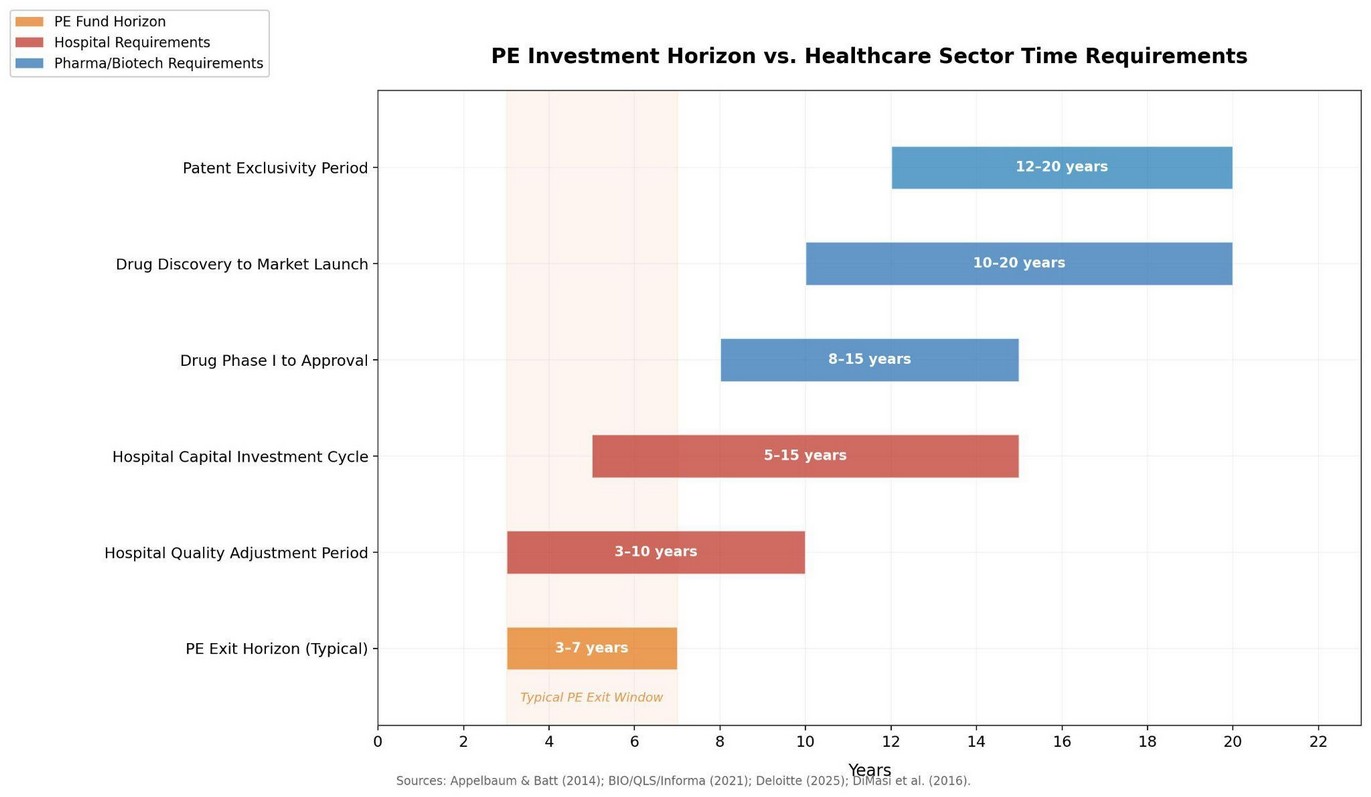
As depicted in Figure 13, the conventional exit horizon for PE investments of three to seven years overlaps with the adjustment period of hospital quality but significantly lags behind the drug development process, whereby the average time from Phase I to approval stands at 10.5 years (BIO/QLS/Informa, 2021; Deloitte, 2025). With the average holding period for PE investments in the healthcare sector recording a 20-year high of 7.1 years in 2023, the question remains not only whether PE increases profitability but also what the cost of the trade-off is and who pays the price for the improvement to persist.
Comparative Welfare Assessment
As demonstrated in Part I, the relationship between financial ownership by a PE firm and hospital efficiency is positive for the short run but increases financial fragility, hospital-acquired conditions, and negative externalities for the community if leveraged facilities operate under adverse environmental conditions. The mortality paradox of stable mortality rates with rising complication rates does not diminish the above concerns but underscores the fact that the negative effects are not fatal but economically and socially relevant. Hospital failure is not like any other firm failure since it creates negative externalities for the community through reduced emergency service access, travel times, and a burden on other facilities.
As demonstrated in Part II, financial ownership by a PE or venture capital firm in the pharmaceutical industry increases research and manufacturing capabilities without a negative impact on the output of drug innovations. However, the risk channel revolves around the affordability of drugs rather than safety. Accelerating drug expenditure rates, high concentration levels, and brand-name drug prices that far exceed international benchmarks for the US create an environment where financial ownership can have a negative impact on consumer welfare. Figure 14 synthesizes the above findings across the following dimensions of welfare.
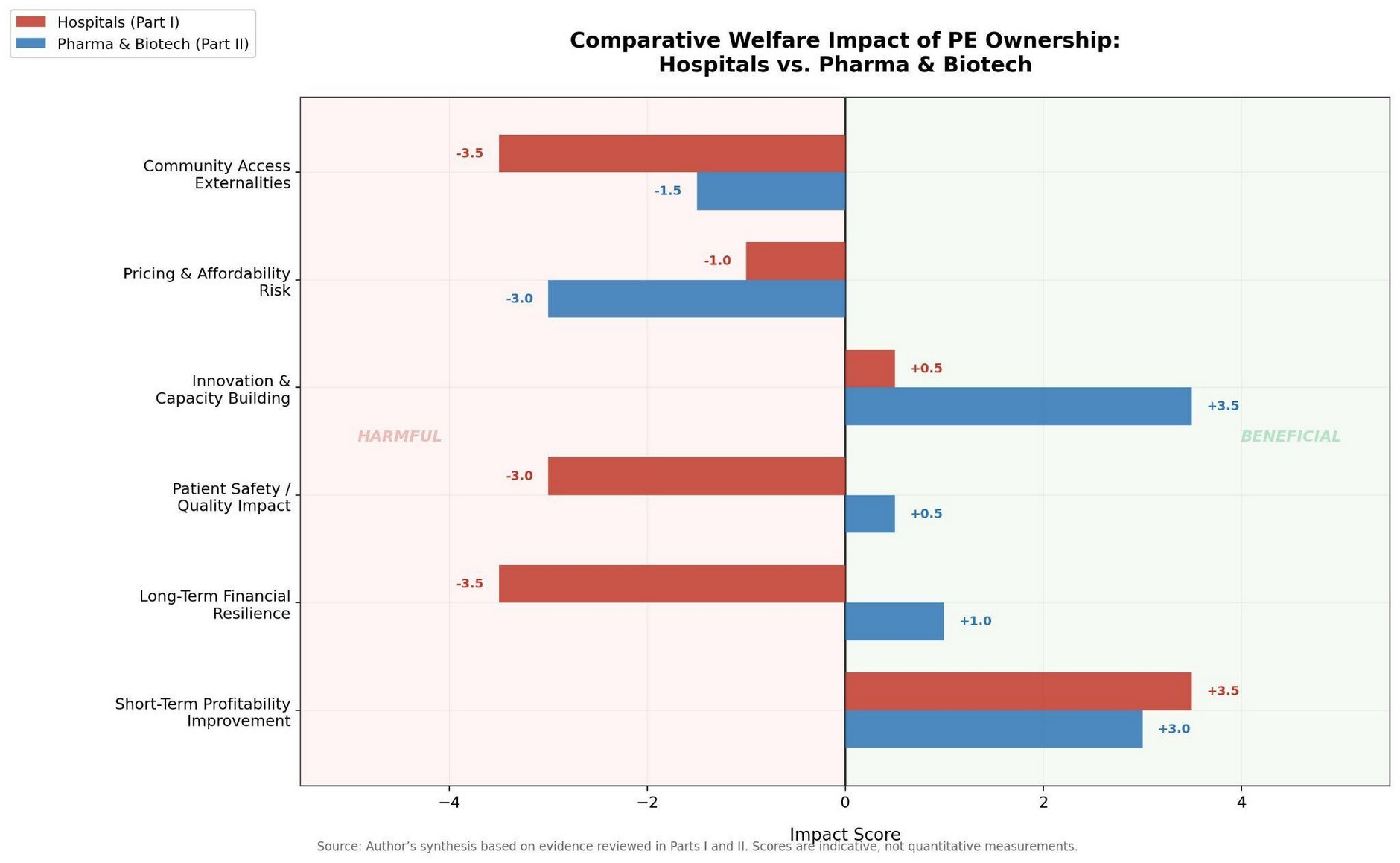
From Figure 14 above, it is clear that both industries share similar profitability advantages in the short run from private equity ownership; however, they differ in all other aspects. Hospital-related risks are operational and geographical in nature, including deteriorating quality of care and physical inaccessibility, while pharmaceutical risks are distributional and financial in nature, including unaffordability and reduced competition. Hence, it is clear that the answer to this research question — to what extent does PE benefit U.S. healthcare companies? — depends on the sector in question. While it is clear in capital-intensive sectors driven by innovation, it is uncertain and even negative in labor-intensive healthcare delivery.
Final Judgement
Based on the evidence provided in this essay, it is clear that PE is more beneficial to healthcare companies in terms of firm-level analysis than it is to the healthcare system in terms of welfare economics. This is a key difference because it shows that the key performance indicators of a PE firm, such as internal rate of return, multiple expansion, and exit multiple, are not aligned with healthcare outcomes, such as access, safety, affordability, and system stability. It is possible for a healthcare firm to benefit in terms of financial performance through PE ownership, even though it could be causing harm to the people it serves, such as patients and employees. Thus, it is clear that the extent of benefit depends on whether the analysis is done from a firm perspective or a system perspective.
In the pharma and biotech industries, innovation is a key factor in their success. In this case, PE investments are more aligned with the key objectives of value creation because they provide much-needed capital, which is crucial in these firms because they are key in innovation. Data from FDA approvals shows that there is no decline in innovation output; in fact, PE transactions have increased infrastructure in terms of manufacturing and distribution. Thus, the extent of benefit is high in this case, although it is marred by concerns over affordability and competition, where welfare could be transferred from public hands to private hands.
In the direct delivery of health care, especially in hospitals, the financial incentives that are tied to PE firms do not align well with the primary concerns of hospitals, which are the welfare of the patients and the stability of the system. Indicative of this is the evidence regarding the rate of acquired health conditions, the financial instability of the LBO model, the unemployment rate, and the rate of closure of rural hospitals. This, therefore, indicates that the benefits of the PE firms are lessened by the potential for harm. Although the mortality paradox indicates that the rate of death has not been elevated after PE firms acquired the hospitals, this is still an issue of concern.
The most reasonable conclusion is, therefore, sector-specific. In the pharma and biotech sector, innovation requires a lot of capital input, which is resolved by the PE firms. However, in hospitals the financial gains are not enough to counter the costs of system instability and patient safety. In other words, PE firms benefit the pharma and biotech sector of the US healthcare industry but harm the hospital sector.
Selected References
Aiken, L.H. et al. (2014) The Lancet 383(9931). · American Investment Council (2024) Private equity investment in life sciences. · Angrist, J.D. and Pischke, J.S. (2009) Mostly Harmless Econometrics. · Appelbaum, E. and Batt, R. (2014) Private Equity at Work. · Arrow, K.J. (1963) The American Economic Review 53(5). · ASPE/RAND (2024) International prescription drug price comparisons. · Bain & Company (2025; 2026) Global Healthcare Private Equity Report. · BIO/QLS/Informa (2021) Clinical Development Success Rates. · Citeline (2024) Clinical Development Success Rates. · Deloitte (2025) Measuring the return from pharmaceutical innovation. · DiMasi, J.A., Grabowski, H.G. and Hansen, R.W. (2016) Journal of Health Economics 47. · FTC (2024) Pharmacy benefit managers interim report. · Gao, Kim and Sevilir (2023). · Jensen, M.C. (1986) American Economic Review 76(2). · Kannan, S., Bruch, J.D. and Song, Z. (2023) JAMA 330(24). · Krippner, G. (2011) Capitalizing on Crisis. · Lazonick, W. (2014) Harvard Business Review. · Mazzucato, M. (2018) The Entrepreneurial State. · McKinsey & Company (2025) Pulse check: biopharma dealmaking. · Pew Research Center (2018) Travel time to hospitals. · PitchBook-NVCA (2025) Venture Monitor. · Private Equity Stakeholder Project (2024). · Scannell, J.W. et al. (2012) Nature Reviews Drug Discovery 11. · Sheps Center for Health Services Research (2023). · Song, Z. et al. (2023). · World Bank (2023) World Development Indicators.
Contribute
Have research of your own?
Submit your essay to the Metisync desk — selected work is published here with full attribution.
Continue reading


Discussion (0)
to join the discussion and share your perspective.
Loading comments…